Fractional CEO for owner-led businesses

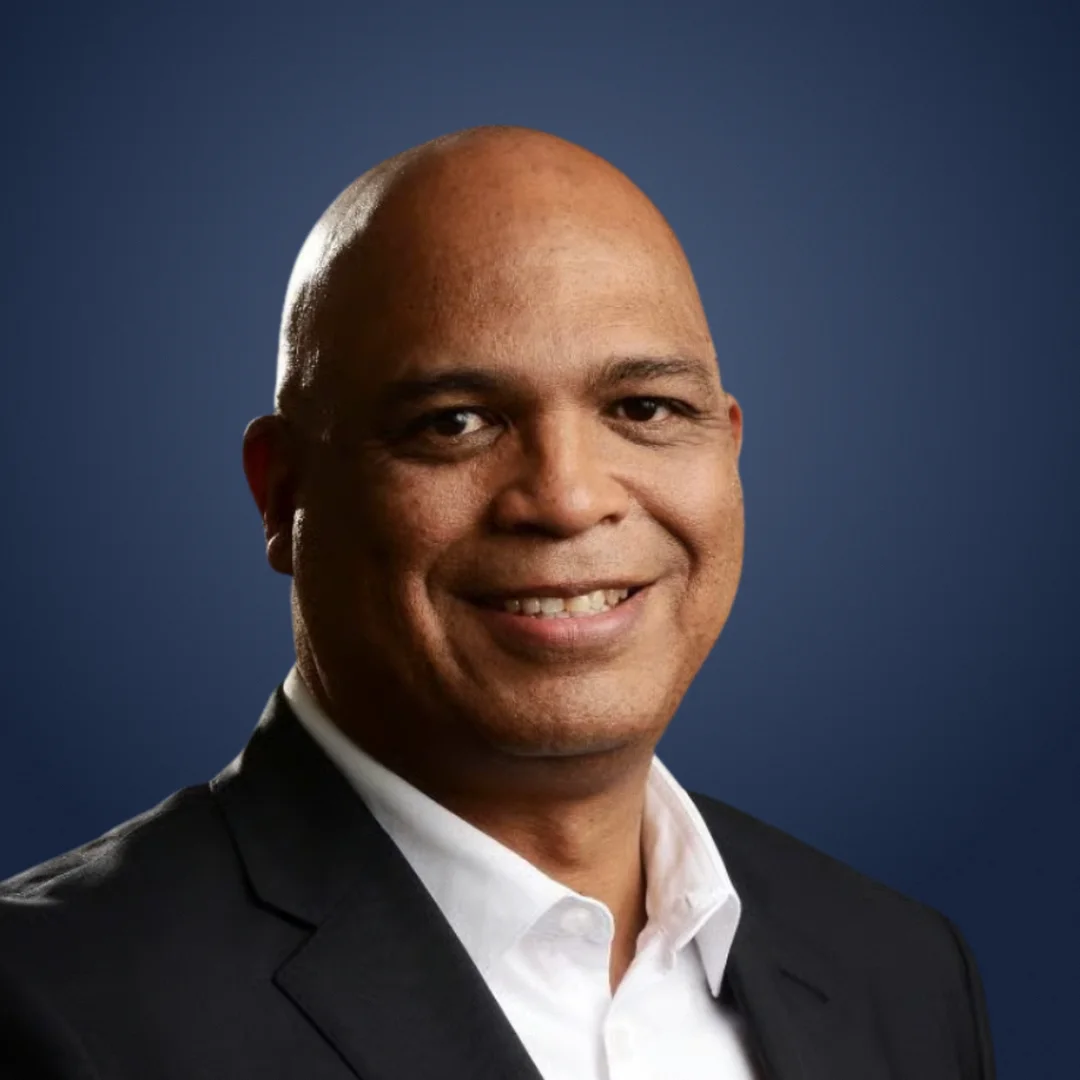
Igshaan Soules

Build a business you can grow, hand over, or sell.

Igshaan Soules, Fractional CEO, South Africa

Igshaan steps in beside owner-CEOs whose companies are profitable but still run through them. He finds the decisions quietly narrowing the company's future options, then builds the leadership, organisational and technology capability its next chapter requires.

More than 20 years running businesses inside listed groups and building his own.

Executive roles and client work include

  • EOH
  • Altron
  • Blue Label Telecoms
  • South African Breweries
  • Safmarine
  • Industrial Development Corporation
  • City Power Johannesburg

The situation

When a profitable business still runs through its owner

Revenue and profit are real. The difficulty appears when the owner wants to step back, appoint a successor, bring in a partner or sell, and finds each move harder than expected.

  • Every significant decision still reaches your desk

    The leadership team runs the day, yet pricing, people and direction wait for the owner. The business moves at the speed of one diary.

  • A few relationships carry too much weight

    A single leader, account or supply line holds a share of the business that a buyer, partner or lender would mark down.

  • The structure that won early growth now limits it

    Decisions, roles and systems were set up for a smaller company, not for the size the business has reached.

  • A handover, partnership or sale is on the horizon

    The decisions that will set its terms are being made now, years before anyone signs.
The owners Igshaan works with

Who
Owner-CEOs, usually ten years or more into the business, with senior managers already in place.
Outlook
Ambitious for what comes next, open to having their thinking challenged, and ready to own the decisions that follow.
Sectors
Business process outsourcing and contact centres, staffing and recruitment, telecoms and prepaid distribution, ICT, learning and development, financial services, utilities and the public sector, and professional services.
Where
Businesses across South Africa, engaged on a fractional basis.
Not the right fit
Companies not yet profitable, owners looking for a quick sale checklist or a valuation figure, and anyone who wants a report rather than a change.

Engagements

How an engagement begins and builds

Igshaan is paid for expertise and outcomes, not hours. Every engagement starts in the same place.

  1. Step 1: Business Value Strategy Session

    A 90-minute working session that identifies the decision most likely to create value in the business now.

  2. Step 2: Business Value Intensive

    A focused piece of work to make that decision and act on it, with the owner and the leaders it affects.

  3. Step 3: A continuing role

    Where the business needs sustained support, Igshaan takes a defined role beside the owner-CEO and senior team, for an agreed number of days a month.

Ways to engage Igshaan

Engagements are contracted with Igshaan Soules, trading as Humn Systems.

Fractional roles are set in days per month, agreed once the strategy session has shown what the business needs.

The fractional CEO role is the core of every continuing engagement. Where a business needs a lighter or narrower form of the same work, it can take one of three other shapes.

  • Fractional CEO

    Embedded with the senior team, working alongside the owner-CEO rather than replacing them, and reporting to the owner or the board.

  • Strategic adviser

    The same work at a lighter weight: Igshaan works with the owner-CEO on the decisions in hand, without a seat in the leadership team.

  • Executive coach

    The leadership side of the role on its own: one-to-one work with the owner-CEO or senior leaders through a transition.

  • Non-executive director

    Governance on its own: independent challenge and oversight from a board seat.

Method

The Freedom Framework

Igshaan's framework is an architecture of six conditions, the 6Cs, that build business value and owner freedom together. The Next Chapter Leadership Scorecard, a free self-assessment, shows an owner where the business stands against them.

Take the Next Chapter Leadership Scorecard

The Freedom Framework drawn as a building: six pillars, Clarity, Capacity, Connection, Conviction, Congruence and Continuity, stand on a base of owner freedom and carry business value.
Business value
  1. Clarity
  2. Capacity
  3. Connection
  4. Conviction
  5. Congruence
  6. Continuity
Owner freedom

Results

What changed where Igshaan led

Outcomes from portfolio leadership inside a listed group and from recent work with owner-led businesses.

  • 9

    Founder-led businesses led as one portfolio

    Brought under Igshaan's direction as a single portfolio inside EOH, a listed group.

  • R65m

    Profit before tax across that portfolio

    Produced by those founder-led businesses together.

  • 9,000

    Young professionals appointed

    Recruited for a presidential project at a scale and pace no single business in the group could meet.

Five owners, one national programme

Situation
Five staffing and recruitment businesses in a listed group, each too limited in reach to meet a national appointment programme alone.
Igshaan's role
Igshaan brought the five owners to accept that their combined geographic and capability coverage was worth more than competing.
What changed
The businesses delivered the programme together, on a scale none could reach separately.

A partnership decision, made and acted on

Situation
A managing partner of a three-partner firm had put off, for six months, confronting a partner whose contribution had fallen to almost nothing. The delay cost roughly $40,000 in salary alone.
Igshaan's role
In the Business Value Intensive, Igshaan worked with him to make the decision and prepare the conversation.
What changed
The partners reached a new agreement on contribution, pay and authority.

I realised I had become a passenger in my own business, now I'm leading again.

Matthew Keevy
Director, Hive-IOT

A strategic thinker and an exceptional coach.

Gary Graham
Chief Reinvention Officer, 3IS Group

About

A peer who has carried the same decisions

Igshaan Soules is a fractional CEO based in South Africa who works alongside owner-CEOs of established businesses, building the senior team, decision rights and structure that let the business grow, change hands or sell without depending on its owner.

His career has alternated between corporate leadership and founding his own businesses. He built and ran a coaching and human capital firm, then led portfolios inside listed groups: portfolio managing director over founder-led businesses at EOH, managing director of Altron People Solutions, and divisional CEO of an eleven-figure business at Blue Label Telecoms.

Since 2014 most of his work has been with founder-led and owner-led businesses. Across them he saw the same pattern: owners are excellent at solving a customer's problem, and slower to see the point where the operating model that built the company starts to hold it back.

He founded Humn Systems to work on exactly that point, helping owner-CEOs build a business that keeps giving them options.

Philosophy

The value in a business is the freedom it gives its owners. A successful business is not always a valuable one, and the decisions that decide which one you own are made years before a sale, a successor or a partner.

Igshaan Soules

Credentials

Qualifications and standing

Qualifications

  • MBA, UCT Graduate School of Business
  • Certified Professional Co-Active Coach (CPCC)
  • Certified Reinvention Practitioner

Boards and industry

  • Director, Lead Growth Digital LLC, a US-registered technology company
  • Former non-executive director, Serengeti Estates
  • Former Executive Committee member, BPeSA, representing ICT and digital

Faculty and writing

  • Former international faculty, Coaches Training Institute (CTI)
  • Former associate faculty, Center for Creative Leadership (CCL)
  • Co-author, The Leadership Reboot, with Gary Graham

Community

Questions

Questions owners ask before engaging Igshaan

Direct answers on roles, fees, timing and what an owner keeps.

What does a fractional CEO do when the owner is already the CEO?

Igshaan works beside the owner-CEO as a senior peer inside the leadership team, not as a replacement. The owner keeps the top job and final authority. Igshaan takes defined responsibility for the leadership, structure and decision rights so the business runs with less of the owner, and is accountable for that progress month by month.

How much does a fractional CEO cost in South Africa?

Igshaan prices each engagement on the expertise and outcomes involved, never by the hour. The fee is agreed once the opening strategy session has defined the decision and the work; for a continuing role it reflects the number of days each month and the scope of the decisions involved. Because a fractional executive is engaged for part of the month, the business secures senior leadership for less than a full-time CEO package.

How soon can an engagement start, and what does the first quarter deliver?

The opening session is arranged as soon as diaries allow, and the Intensive can follow directly from it. The first quarter is designed to deliver the priority decision taken and implemented, the owner's and leaders' decision rights written down, and a sequenced plan for the structural changes that follow.

How is a fractional CEO different from a full-time hire or an outside adviser?

A full-time CEO would replace the owner or sit above them, at full cost. An outside adviser studies the business and leaves recommendations. A fractional CEO works inside the business for a set share of the month and shares accountability for results with the owner, which is why Igshaan does not take on work where the deliverable is a report.

Is my business ready for a fractional CEO?

The clearest signs are a profitable company, senior managers who still defer upward, and an owner who can name a future event, such as a successor, an investor or an exit, without a plan to reach it. A business still working towards profitability is better served by other support first.

Does Igshaan work on site or remotely?

Both. He works from South Africa with companies across the country, on site for leadership sessions and key meetings and remotely between them. His coaching work has extended to clients in the UK, the Netherlands and Norway.

What does the owner have at the end of an engagement?

A company that needs less of its owner, on the owner's terms: a leadership team that owns its decisions, written decision rights, a structure fit for the next stage, and lower concentration in the team, the customer base and the supply chain. The owner is left with real choices about what happens next.

Does Igshaan value businesses or broker sales?

No. He does not value businesses, broker sales or run transactions. His work comes earlier: preparing owner and company for those decisions, so that when an acquirer, investor or successor arrives, the business is ready and the owner holds the options.

Talk to Igshaan about the next chapter

Tell Igshaan what the business does, where it still depends on you and what you want it to make possible. He replies as soon as he can.

One line dividing into three open roads, labelled grow, hand over and sellGrowHand overSell